
Elegrip 40A NACS Level 2 EV Charger Review | Portable & Wall-Mount Tesla Charger Tested
Troubleshooting note from this video
📝 Description
Elegrip 40A NACS Level 2 EV Charger Review & Real-World Charging Test
Tesla charger: https://dada.link/kOJVfe
J1772 Charger: https://dada.link/gMbSna
In this video, we test the Elegrip Level 2 EV charger with native NACS (Tesla) connector support. Unlike many chargers that require adapters, this charger comes with the Tesla plug built in.
We test the 40A model and see whether it can actually deliver the advertised charging performance.
Topics covered:
• Unboxing the Elegrip EV charger
• Portable vs permanent installation
• Native Tesla (NACS) connector
• Adjustable charge current settings
• Timer functions
• Built-in safety protections
• Real-world Tesla charging test
• Charging at 40 amps
• 9.5kW charging power
• Comparison against Tesla Mobile Charger
• Comparison against Tesla Wall Connector
• Pros and cons
• Long-term durability concerns
• Value and pricing
During testing, the charger successfully delivered 40 amps at approximately 237 volts, producing around 9.5kW of charging power.
Compared with Tesla chargers:
Tesla Mobile Connector:
• Approximately 32 amps
• Portable
• Supports 120V and 240V charging
Tesla Wall Connector:
• Up to 48 amps
• Permanent installation
• WiFi and app support
Elegrip Charger:
• Up to 40 amps
• Portable and wall mount capable
• Native Tesla connector
• 240V charging
• LCD display
• Adjustable current settings
We'll continue long-term testing and update everyone if any issues develop.
#Tesla #EVCharger #NACS #Level2Charger #Elegrip #TeslaCharging #ElectricVehicle #EVSE #EVLife #HomeCharging
00:00 Unboxing the Elegrip EV Charger
00:34 Portable and Wall-Mount Design
00:54 Why Native Tesla (NACS) Matters
01:49 Model Numbers and Charger Versions
02:16 32A vs 40A Models
02:32 Portable or Permanent Installation
03:17 Current Adjustment Settings
03:47 Timer Function Explained
04:07 Safety Features
04:24 Powering Up the Charger
04:45 Timer Settings
05:18 Current Settings and Menu
06:05 Connecting to the Tesla
06:31 Charging Begins
06:52 Charging Current Ramp-Up
07:29 Tesla Charge Limit Discovery
07:47 Full 40A Charging Test
08:06 Victron Off-Grid System Supplying 9.5kW
09:22 Real Charging Session Results
09:41 Portable Versus Permanent Use
10:08 Cradle Design Concerns
10:48 Comparison With Tesla Chargers
11:01 Tesla Mobile Connector Comparison
11:35 Tesla Wall Connector Comparison
12:18 Price and Value
13:06 Company Background
13:37 Cable Quality and Dirt Resistance
14:08 Final Thoughts
Connector Type NACS (Tesla)
Charger Type Level 2
Maximum Output Current 40A
Charging Power ~9.5kW
Input Voltage 240V Split Phase
Current Settings 16A, 20A, 24A, 32A, 40A
Timer Function Yes
LCD Display Yes
Wall Mountable Yes
Portable Use Yes
Carrying Case Included
Built-in Protections Ground fault, overcurrent, auto shutoff
App Support No
Maximum Delay Timer 12 Hours
Tesla Adapter Needed No
Use Cases Home charging, travel charging, portable charging
teslachargingchargerconnectorportablecurrentelegripnacswallsettingsampscomparisontesttimerlevel
🎬 Related Videos

📝 Video Transcript
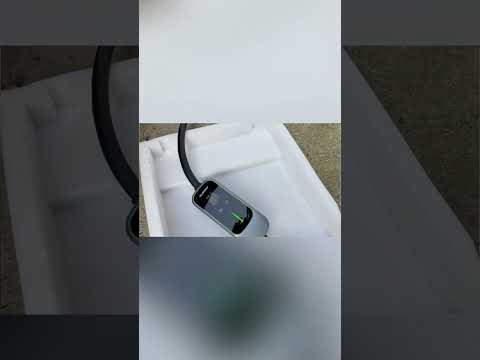
Instruction manual, mounting screws, the entire charging unit in this bag here. Let's unzip it. Charging head. >> [music] >> So, this right here is a portable and permanent charging unit from Ella Grip.
This company [snorts] right here. You just saw me unbox it, and there's something special about this one. Primarily because uh this one actually comes with the charging unit, right? So, uh I forget the the model number before, right?
But previously in North America uh many years ago, uh all these EV manufacturers essentially coming up with their own, right? There was a Chademo, 1772, or I forgot what the all all the other numbers were, right? They were kind of all over the place. And then eventually, they all settled on I think it was the J1772.
Um and then eventually, Tesla decided to open source, you know, their charging uh plug and make it like open-source and standard, and everybody kind of adopted it. It kind of became the one for North America, right? So, uh that's special primarily because Tesla seems to have the best charging network all around. And then they are now other, you know, vehicles can essentially charge there.
So, that's what makes this special because you it has the charging plug, the Tesla charging plug, without having to use an adapter. Uh that's been, you know, a little bit of a pain point of annoyance cuz you have to plug in an adapter, and you have to plug it into your Tesla or something like that. People just don't like that. But this one has it natively locked in here.
So, this one is from Ella Grip, and I'm going to have to read you the model number. The model number on this one is the >> CP 25-N40N-A0A0-7 or otherwise known as WB-NP2-AC2.4-40AS-A. All right, so that's a long model number. But, the important thing to take away from this is that there's essentially two different kinds of models of these, okay?
Uh there's one that has the 32 amp nominal that you can charge with, and then there's one that has the 40 amp nominal that you can charge with. And this one is the 40 amp nominal you can charge with. So, we're going to dig into this, okay? So, the reason earlier I said that this is a portable and permanent charging solution is because as you can see here, right?
You saw me take it out of the box. You can essentially carry this around, pack it inside of the uh carry case, or you can mount this somewhere permanently on a wall, and it can eventually just be, you know, a permanent wall-mounted solution, right? So, you can have it permanently wall-mounted solution, or, you know, you got to decide to travel somewhere, so you want to take a mobile charger. Just take it out of its cradle, put it in the bag, and just carry it, right?
So, the question is, is this going to be any good? And that's exactly what we're here to find out today. So, it's not almost like an infinite adjustment dial that you can really use, right? But, by pressing the adjustment current, right?
You can set it between 6, 8, 10, 13, or 16, right? Or, depending on which one you actually have, and since I have the one that allegedly goes to 40 amps, we're going to test it to see if it can go to 40 amps. But, it's not like I can change it to, let's just say if I wanted 12, I can do 12, right? They're already preset.
That's the one I want to point out. Also, uh this one has a timer. Both the current and the timer have to be set after the uh charger has been plugged into the wall outlet while before it has been connected to the car socket. So, if you don't know what that means, plug it in, turn it on, set it, and then start charging, okay?
Uh you cannot change the setting during the charging process. It's got all the kind of default protections as you would see expect in most electric vehicle charging uh devices. So, we don't need to go and read through every one, but over current, under, automatic power uh shutoff. It's got the grounding detection just like the charge just like the default one from Tesla does itself.
All right, you guys, we have it plugged in, and this is what the screen looks like when you boot it up. It's got this light here. It has green ring around here. If we can help get rid of some of that glare, hopefully you can see it.
Uh you can see all the stuff we talked about on the screen earlier. It's got 40 amps registered right there, 20° C right now. It's at 240, and it's charged 0 hours. So, this button right here is the timer button.
So, you have to hold this down, and you can set a timer. 0 1 2 3 4 5 6 all the way up to I'm assuming 12. So, once it goes to 12, it sets back to 0. So, you can charge for about 12 hours on a timer, right?
We're going to set that to 0 for now. This thing says that it's ready cuz, you know, hopefully uh I've been using this 50-amp receptacle for a while, so I really hope that it's, you know, ready. Uh we've used it with the Tesla charger before, so we know it's wired up well, and it actually does work, right? Um we've also, you know, been charging the Tesla with this off-grid system.
But, anyways, point is, this button right here is the button you use to change the rate. So, if you want to do it use it, you don't just push it. You have to hold it for a few seconds, right? And then there it goes.
It starts blinking. Right now, it's on 40. You can change it to 16, 20, 24, 32, 40. That's that's really weird.
So, it goes from 40 to 16, which is down, to 20, which is up, 24, 32, 40. Yeah, so it cycles upwards from here, right? So, it goes down and cycles all the way up. But, uh I don't think that was what the manual said, so that's interesting.
It doesn't say doesn't do exactly what the manual said, but you can switch, right? So, I'm going to leave this on 40, obviously, to see if we can charge at the max rate. All right, here we are outside. We have it plugged in to this 50 amp circuit here.
So, what we're going to do is leave it on 40 amps charge. It's in a state of ready. We're going to go ahead and plug this guy in. So, let's take this off.
Let's go over here. Press the button. Look at that. It's plugged in.
I heard a click. Do you hear that? That's the sound of charging. You see those lights blinking?
That's the sound of charging or the lights of charging. So, let's go take a look at this. Look at that. Looks like it's switching between 24 amps, 27, 30, 32.
Maybe it's trying to see if it can go to 40. Let's see how it works out. Hang out here for a few more seconds. Looks like it's at 32 amps.
I wonder if that's because we limited it to 32 amps at this location. Let's go take a look. All right, look at that. Take a look.
It says right now it's It is limited at 32 amps. Let's go here. Set the limit to 40. And then let's go check the charger.
Coming back to the charger. Look at that. We are now running at 40 amps of charge, which is about 9.5 kilowatts according to this thing. The voltage of this is 237 volts split phase.
40 amps. Let's see how long this can go. All right, so taking a look at the Victron system here, you can see right here we're in the status of inverting and we are drawing 9472, roughly about 9500 watts. L1 4700, L2 4700.
Uh we're actually drawing more than this from the batteries. It says it's drawing about 700 or 7500-ish watts from the battery. Obviously, we're drawing more than that. Uh the reason that uh this is incorrect here is because we only have the EG4 wall mount batteries uh connected to communication, but there's other batteries connected to the system without communications going, which is why that number's going to be a little bit off.
But we do like having um the Cerbo GX connected to the uh EG4 indoor wall mounts because the communications on that is easy. If you need a video for that, there's a video on the channel for that, so go find that. It'll really help you out if that's what you're trying to get connected. But you can see here we got the two Victron Quattros uh 48-V Quattros uh powering this off-grid system charging this Tesla at a 40 amps, which is the max I think level two for any home standard system.
Uh if you get the Tesla charger, you can charge it at 48 amps, but in this case we're only charging at 40 amps. So that's what you get with this Ella Grp level two Tesla charger. So let's tell you about our thoughts, okay? Uh first we literally just had a full session of charging, the one that you just saw.
Uh charge was like 47 to like 80%, so it's somewhere around like 33%, okay? Didn't have any issues, charged up all the way, no problem, okay? So, uh this thing here, right? It's a permanent immobile charger because you permanent here and you can take it out.
You take it to go with you in the carrying case, right? This carrying case is obviously a lot bigger than the Tesla mobile charger, but this one is, you know, more capable or not more capable. It can charge at a higher amperage, right? Uh the other things I do have a few concerns about this, right?
The the cradle or cradle is nice, right? But it's all plastic. It's designed so that you have this connector plug and you just hang it up here, okay? Uh it versus the one from the Tesla permanent install charger you just kind of design to hang over or maybe there's one where you can just plug in on the side, which we have that, too.
So, uh that's interesting primarily because if you look at this cradle here, there's no like side bracket support, right? Bridging support, so it's now all of this weight is hanging off of literally this one edge here. So, over time I can see this breaking. So, it would be nice if they added some kind of support here to extend the, you know, lifespan or like the stability of that, but I'm not going to complain too much.
So, uh if you look at this, it's going to compare to the other two ones that are currently on the market from Tesla. There's a bunch of other chargers on the market, but the two from Tesla are going to be the Tesla mobile charger, which I think is somewhere around 300-ish dollars, but the mobile charger is a lot smaller than this. It obviously has a lot other capabilities like for instance, you can plug in and it can use 240 split phase or it can use 120 single phase. Uh but the mobile charger itself is limited to I think it's 32 amps.
At least the one that we have is 32 amps. So, uh this one can charge at eight additional amps, right? But this is only 240 only, okay? So, uh for about I think that's like 300-ish bucks or so.
Um things change in in the time of the video, uh but you know, it may change at any other time. So So that's going to be about 165-ish dollars more. Let's talk about the permanently installed one, which we've showed how to install on this channel before. We have a few here and there and over there.
So those we've permanently installed haven't had any issues. Those are 48 amp chargers, meaning it'll push 48 amps to the Tesla. And those I believe are somewhere around 365 or 465. I want to say they're around $465 for permanently installed one that charge at four additional or eight additional amps than this one.
But like I said, those are OEM. And those are split phase only permanently installed, fine, okay? Uh so if you want to compare, this one's probably most kind of sits almost in between the two cuz it can do more than 32 amps but less than 48 amps and it's permanent and mobile, right? Obviously, this doesn't have an app that you Well, at least not we found.
Doesn't have an app you can use. You can see all the ones with the permanently installed ones. And this one can only do 240 split phase using the plug. So you're not going to be able to permanently install this.
In theory, you could if you cut it, wired it up, but we're not going to go through there, okay? So for $205 from Amazon, this guy it seems to be pretty good primarily because it's worked fine. And sure, we've only charged one time with it, but we're going to keep using it over the next few months. And if we run into any issues, we'll let you know.
Uh we'll get it posted or something like that. But uh so far, I haven't seen an issue, but that's only one charge, so we'll have to see how it goes. But if you're thinking about this, let me point this out. If you look at this company on Amazon, right?
They have a bunch of other chargers, so it's not like they only make this one thing. It seems to be a generally established company that's been producing chargers and stuff like that on the market. So um I don't want to say they have a long track record, but it's not a one-and-done company or at least one-and-done charging company. So, that's a good thing to know.
And just like the Tesla charging cable, you know, we have dogs and you've seen we've literally charged once and dragged this cable into through the garage like one time and it's like filled with like dog hair, right? Just to look at this cap here. You see this cap here? Like it's been literally not even a day of use.
Touched the ground, stuck dog hair, but that's just how these cables go. Haven't seen one that doesn't have that problem. Not particularly a fault to this, uh, but you see all the light it's got the green thing on here and when it's charging this green bar will move just like the one on the Tesla. So, uh, you know it's working by looking at it.
You know it's looking by looking at the screen and you can know it's working by inside being inside the Tesla, but you don't have an app to look at it. So, what can you do? So, fast forward a couple weeks I'm back to the past me for a bit, a few updates. So, we've been using this charger for a couple weeks now and it's been fine.
Have had no issues whatsoever. I did some Googling about this mainly because we don't know too much about this company so far and it's out of stock on amazon.com. So, we found that there is a store.electrigrid.com where you can buy this charger and even on their site it's out. So, looks like they're probably having some issues getting it mass produced or something like that, but according to their site it says it'll be back in stock on July 31st.
It's currently July 4th now, so it's going to be a little bit of time before it gets into stock, but it looks like you may be able to pre-order it or something like that or get your name online in case you wanted to get that. So, remind you again the reason you would get this is because this is essentially half the cost of a Tesla charger, a wall-mounted charger, uh, but remember it can't do the full 48. So, this one will do 40, so make sure you keep that in mind. The other thing I wanted to note is that in case you didn't have a Tesla and you had something else, right?
You could probably get the J1772 charger uh, for, you know, other electric vehicles that have that, but since most of the vehicles in North America are going towards the NACS charging standard, uh, that I would probably wait for something like this if you're looking for something like that. So, hopefully I just wanted to let you know haven't had issues whatsoever, but that's just me. Your mileage may vary or something like that. If you have a different experience, let us know because we would love to hear about it and then maybe test them certain scenarios or something like that.
But, otherwise hopefully this video helped you guys out. Have a great day, get back to work, and we'll see you guys next time. >> [music]