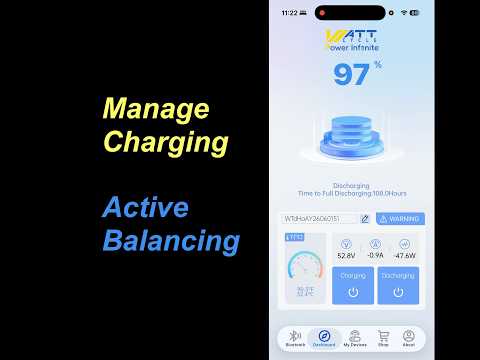
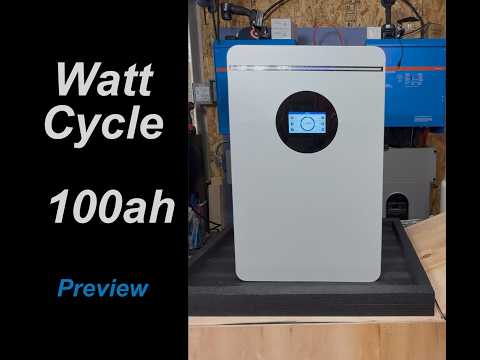
WattCycle 48V 100Ah Wall Mount LiFePO4 Battery Review: Capacity Test, Teardown & Specs
Troubleshooting note from this video
📝 Description
https://www.wattcycle.com/products/48v-100ah-wall-mounted-5120wh-bluetooth-lifepo4-battery?ref=gzogaoop
6% Discount Code:KMG
In this video, we take a deep look at the new WattCycle 48V 100Ah wall-mounted LiFePO4 battery for solar, off-grid, home backup, garage power, RV, and inverter battery systems. This is a 51.2V 100Ah / 5.12kWh lithium iron phosphate battery with Bluetooth app monitoring, LCD touchscreen, CAN/RS485 communication, active cell balancing, quick-connect battery terminals, and wall-mount / floor-stand installation options.
We cover the real-world features, internal build quality, BMS layout, bus bars, breaker, fuse access, quick-connect cables, mounting hardware, inverter communication options, app control, and capacity test results. I also compare where this battery fits against other budget 48V 100Ah server rack and wall-mounted LiFePO4 batteries from brands like EG4, Eco-Worthy, and other value-oriented home energy storage options.
In this review:
WattCycle 48V 100Ah wall-mounted battery overview
LCD touchscreen and Bluetooth app features
3A active balancing / equalizing switch
CAN and RS485 inverter communication settings
Quick-connect battery cable pros and cons
Wall mount bracket, grounding, and floor stand feet
Internal teardown and BMS inspection
Bus bars, fuse, breaker, temperature sensors, and build quality
Capacity test results at around 100Ah
Real-world use with a Victron inverter
Price, value, concerns, and final recommendation
Officially listed specs include 5.12kWh capacity, 51.2V nominal voltage, 100Ah capacity, 100A max input/output current, active equilibrium, RS485/CAN communication, Bluetooth app + LCD monitoring, 0°C to 55°C charge temperature, -20°C to 60°C discharge temperature, and 99.21 lb / 45 kg weight. Always verify current specifications, certifications, compatibility, and pricing directly with the manufacturer before buying.
This battery may be worth considering if you need a compact 48V wall-mounted LiFePO4 battery for solar storage, home backup power, garage inverter systems, or off-grid power — especially if you want a budget-friendly alternative to traditional server rack batteries.
#wattcycle #lifepo4 #solarbattery #48vbattery #offgrid #homebackuppower #batteryreview #battery #solarpower #energystorage
#wattcycle
Product WattCycle 48V 100Ah Wall-Mount Bluetooth LiFePO4 Battery
Chemistry LiFePO4 / lithium iron phosphate
Nominal Voltage 51.2V
Capacity 100Ah
Energy 5.12kWh / 5120Wh
Standard Input Current 50A
Max Input Current 100A
Standard Output Current 50A
Max Output Current 100A
Overcharge Protection 58.4V
Overcharge Recovery 53.6V
Overdischarge Protection 40V
Overdischarge Recovery 47.2V
Charge Overcurrent Protection 110 ± 10A / 10s
Discharge Overcurrent Protection 120 ± 10A / 10s
Equalization Active equilibrium / active balancing
Communications RS485, CAN
Monitoring Bluetooth app + LCD touchscreen
Parallel Capability Official page lists up to 15 units
Charge Temperature 0°C to 55°C / 32°F to 131°F
Discharge Temperature -20°C to 60°C / -4°F to 140°F
Dimensions 15.67 × 7.87 × 24.61 in / 398 × 200 × 625 mm
Weight 99.21 lb / 45 kg
Warranty 5 years, extendable to 7 years with registration
00:00 WattCycle 48V 100Ah Wall Battery Review Intro
00:40 Front Display, Status Light Bar & LCD Screen
01:28 Active Balancing / Equalizing Switch Explained
02:25 Touchscreen Menu, Pack Info & Cell Voltages
02:59 CAN Protocols, RS485 & Inverter Compatibility
04:53 Breaker, BMS Switch & Side Label Specs
05:33 Charge/Discharge Current & Temperature Ratings
06:12 Grounding Point & Side Wall-Mount Brackets
07:15 Communication Ports, Address Settings & Parallel Setup
08:16 Quick-Connect Battery Terminals Explained
10:31 Included Battery Cables & Connector Concerns
11:51 Rear Wall-Mount Bracket System
13:16 Floor Stand Feet & Installation Options
14:24 Mounting Rail Strength & Design Concerns
15:22 Internal Teardown Begins
15:41 Cell Layout, Bus Bars & Balance Leads
16:38 Cell Vents, Cable Management & Chassis Design
18:23 BMS, Breaker, Fuse & Internal Wiring
21:23 Build Quality Pros & Concerns
22:48 Capacity Test Results & Real-World Use
23:19 BYD Cell Claim, UL Listing Question & Spec Verification
24:51 Charging, Discharging & 100Ah Capacity Test
25:33 Price, Competitors & Value Comparison
27:05 Bluetooth App, Use Cases & Final Thoughts
28:49 App Experience, Recommendation & Outro
batterywallcapacitywattcycleappbluetoothcurrentactiveinvertermounttemperaturecellcommunicationlcdmounted
🎬 Related Videos

📝 Video Transcript
Hey what's up guys, welcome back to the channel. On this episode, we're going to talk about this because this right here is a 48-V lithium iron phosphate 100-A wall-mounted battery from Watt Cycle. And this is brand new to the market. Wall-mounted batteries are not new to the market, but this one is new from Watt Cycle.
That's what's new. So, I work already got an unboxing video on this, but in this video, we're going to go over some of the results from the capacity test, the specs, and we're going to break this thing down. So, if you want to know more about this, stick with us. >> [music] >> This right here is obviously the front part of the battery, and this blue gradient light right here or light bar is essentially the status bar of the battery.
So, if it's 50% full, be about here. Depending on how full it is is depending on where it's going to be. So, this tells you from far away, in case you have it mounted on the wall, you can just take a glance at it, and you can know how much battery is left in this battery, or at least a rough estimate. Uh here's a screen.
It's got a pretty nice green. This is the first Watt Cycle battery that I have, or that I at least that I've seen that I personally have that has a nice screen. I have other Watt Cycle batteries, but not with the nice screen like this. So, uh it's a pretty good screen.
It doesn't have like super high dense uh pixel density, but it looks nice. It's got basic pack information it got up in here, and this is the part that you're probably really going to like because it tells you the state of charge, the voltage, all the stuff that goes on in here. And from this screen, you can turn on what they call equalizing switch. Uh equalizing switch pretty much means uh active balancing.
So, this can do active balancing between the cells at a max current of 3 amps. So, right now, you can see right here, balancing current is going around 2. 38 to 2. uh 41 2.
36 because the equalizing switch is on, but you can take this right here, and then you can turn it off, and then right, and when you hit right, it'll save it, and then it'll turn it off. I don't know why anybody would want to turn off, you know, equalizing balancing, but we're not going to do that. We're just going to leave it there to on. So, right here you can see charge is on, discharge is on, all this kind of stuff is on.
Uh but you can, I think in the app, turn off discharging, which is very interesting cuz I don't think I've ever seen uh a big battery like this, or at least a 100 amp hour battery, where you could do something like that. So, uh this is nice. It's kind of got like this, you know, odometer or speedometer, whatever you want to call it, type gauge that tells you what's going on. Uh but this is a pretty nice screen.
The screen's pretty good. It's responsive, you know, can't really complain. Uh it tells you pack information, all the cell voltages that are up in here. It came pretty well uh balanced from, at least when I took it out of the box, if you saw that unboxing video, you know that it's pretty well balanced.
Alarm status, charts. Uh if you I just turned it back on, so if you were using it over time, it'll have a chart graph or chart plot on there. Uh you can also just switch between the screens like this, as I just showed you. Uh but it has uh a BMS that you can change on uh protocol.
So, right now, uh right now it's got CAN set right here, right, to uh PYMEG. Uh there's Victron, there's GoodWe, there's Solar, PV, Studer, SMA, Growatt, TBB, SA. It's got all kinds of stuff on here. I do want to, you know, maybe complain just a little bit cuz on the uh what do you call it, the marketing material, it said, I believe it said that it was compatible with uh Luxo uh Luxpower or uh EG4, right?
Uh if you know a lot of the inverters that we're using, at least on the channel, Lux or Luxpower is one of them. Um so, I didn't see Luxpower in here, and I could be wrong, and maybe they shortened it or something else or whatnot, but I did not see Luxpower in here, and I I not see a firmware update available for this. So, maybe I'm wrong, maybe they mean that it's compatible using Luxpower inverters using like Pylontech protocol or something like that, cuz that is a way to get there, right? Because you can just set that on, you know, um or or the 12,000 XP, 6,000 XP, all those EG4 inverters to pretty much uh Pylontech and then set this to Pylontech and it would work, right?
But, I just wanted to point that out in case you're looking directly specifically for Luxpower, I did not see to get that on there. So, just make sure to keep note of that. This one also has RS485. I can get you there.
Um and you can select uh you know, Growatt, Voltronic, all this other stuff on there in case you wanted to use RS485. So, that's a way to do that. Uh if you switch to or actually here, let's go back here. You can go to this LED, you can set the language and all that kind of stuff.
We don't need to change that around. It's got all the uh what do you call it? Watt cycle, uh serial number, version number, all that stuff on there and tell you pretty much about the product. So, moving around to the right side of the battery, this part here is the front, so this is the right side.
On off breaker, CHNT uh 125 amp rated DC breaker. Right now, it's off. Here's the BMS uh switch up here. When it's on, you obviously got the green light.
So, in case you couldn't tell from far away, in case you had it on the side, you can always look at the switch and if it's green, it's on. Uh it's got all the basic standard information in on here in case you were wondering if where this thing is made. So, obviously made in China as, you know, a lot of the products that are coming in at a really low price range these days. Uh but, that doesn't mean it's bad.
Just saying um it's made in China. Cuz that's where a lot of the cells and stuff like that are going to be produced. Uh it's got all the information up in here. I'm not going to read through pretty much everything, but I do want to point out one thing.
It says the standard input current, the recommended thing I think is about 20 amps and the standard output current is about 50 amps. That's what's recommended, but the max it can do continuous is 100 amps in and 100 amps out. Uh it has obviously all the basic uh low overcurrent over protection all that kind of stuff going up in here. The temperature recommended charging temperature is from 0 to 55° C and the discharging temperature is from minus 20° C to 65° C.
So, you know, in case you're using things like that in a really low cold temperature environment, you probably really want to know about that. All right, so let's talk about these two holes right here. This right here is the grounding bolt for this battery. All the metal stuff that's in your system, you definitely want grounded, preferably grounded together since they're all kind of metal and you kind of want them to kind of act as one ground.
That's where you would put this. It's just a little screw you would take out put that there. If you're wondering what this is, it is the side mounting bracket for this battery and it's not to hold the weight. It's essentially to hold the battery from coming off the wall, right?
So, it comes with two of these. If you saw the unboxing video, and you would mount this on here, right with the screws they they provide. And because this battery is designed to be wall mounted, depending on the thickness of your wall, it might sit here, here, here, right? Depending on where you put it.
But, you would put this here and then you would mount essentially, you know, one or two screws here. That way when the battery's hung and somebody knocks it or hits it, it can't just come off, right? Because it's secured using, you know, two verticals or two axes. So, that's what keeps that secure.
This right here is the left part of the battery. This is the front, so this is the left side. You can see right here obviously a recess switch, ADH just in case you wanted to set the address for each one and case you want to parallel them. Dry contacts, it's got like four ports in here.
You can actually configure this to, let's say for instance, use dry contacts to connect to, let's say rapid shutdown or something like that, in case that's what you needed. And it's got 485 port here and a CAN port here, 282 and RS485 1 and RS485 2. These are designed, if I if I remember correctly from the marketing that I saw, and I only have one of these, so I can't test, you know, paralleling like 20 of them, but I believe you're designed to be able to parallel about 20 of these batteries together. Okay, so if you're going to parallel these, and you and you want communications all to work between them, um you would come out of number two right here.
And if you had another battery here, on that second battery, you would go into port one. So, let's think of it as you would probably want to go in and then out, in and then out, and you would just parallel all of them, and that's how you would set up communications if that's what you wanted here. Uh on here, there is two sets of terminals. So, two minus, two plus.
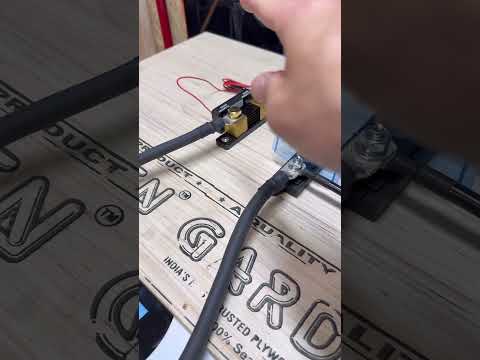
Uh they are the quick connect type of terminals, and I have a love-hate relationship with these things as I'm assuming most of you guys do. Uh anyone just getting into, you know, battery systems and emergency power systems and backup stuff like that, are probably going to love these, cuz you don't have to, you know, get your own cables and and all that stuff, right? But anybody who is doing this, you know, or a lot of this, is probably going to not really like these too much, primarily because almost every single manufacturer is using one that's almost specific to them. What I mean by that is uh these are not proprietary by any means, cuz you can buy these, you know, separately, but all the manufacturers seem to be using something different.
So, if you look at the channel, we've we've seen quick connect styles from uh EG Lithium batteries. We've seen quick connect styles from, if you can see back there, the EG4 wall-mounted batteries. Um there's also quick connects for, if you've seen some of the previous videos, EcoWorth batteries, right? and we also have quick connects for uh like the Chargeverter.
Um and and pretty much a lot of these batteries and a lot of other systems have quick connects. And I've tried every single quick connect that we have here to this terminal, and it none of them work together. So, for instance, I I looked and thought that huh, that Eagle Worthy one looks really similar or really close. It is not.
You cannot get it to fit. Even the Charge Verter one, it's it looks smaller up front, but the diameter is very close. That does also not fit. Obviously, the Power Pro is using the two-wire cables.
Those are just bigger, so they obviously won't fit. But, what I'm pretty much trying to point out here is that um whatever brand that you're in, those quick connects are most likely going to work with any other to a certain range, right? Uh for example, the EG4 outdoor rated ones will work with the indoor rated ones. A lot of the uh indoor rated ones will work with uh some of their other ones, right?
But, for the Charge Verter quick connects on the EG4 will not work with those cuz those are specific to the Charge Verter. And the EG4 uh wall-mounted 100-A hour battery will also not work with that. So, even within manufacturers, you may have issues. Uh but, I just wanted to point out that the quick the cables that come with this are pretty interesting cuz they look exactly like this, right?
And if you want to look at it up close, let's see. It says X-Con, and it connects just like any other quick connect would, right? So, if I take this here, put it up in there, and it doesn't even pull off, right? So, every quick connect usually has some type of way to get it off.
One has one here. Some of them have one here. Some of them have button here. This has two here, and then you would pull, you know, pretty much that off.
And it's got gaskets and stuff that designed it to, you know, help it be more weather-resistant. But, the problem with this is you have to buy these cables specifically, I think, primarily from uh Wattcycle. And if you want to do that, sure, that's fine. You plan ahead, do that, that's fine.
But, you know, sometimes that's going to be annoying because people who use, you know, all different kind of systems, aka, let's say, somebody like myself, we're going to have, you know, bus bars that are dedicated, you know, for the system, and then trying to go in and out and and, you know, connect all of these using a cable like this it's going to be a pretty difficult. So, if they did want to stick with this, it would be really nice if they had maybe one set that was a quick connect that came with the quick connect cables, right? And then another set that was just lugs only. That would be really awesome, right?
All right, backside of the battery. And the backside of the battery has three pre-tapped bolts or or holes where you can put screws and you get three of these. They're flat headed and they're designed to be and they're offset like this so they're designed to be the a thing that essentially holds up, right? So, you would screw these in, right?
So, these are screwed in. >> [snorts] >> And then you would screw all three of these in, right? To here. And then you would essentially mount this bracket here to the wall, right?
And then the battery is designed to be sitting in these three, what do you call that, slots, right? So, this is up against the wall like so, you would it would be easy to install cuz you would just, you know, mount put these on the hole, put a level here, you can level it out. Then you just pick up the battery and then you drop it pretty much in here where it sits like so. So, it's a pretty what do you call it, nice mounting system cuz some of the other ones with other heavy inverters you kind of have to have perfectly positioned.
This one even if you get it like somewhere close on here you can slide it from side to side and it would just like drop in, right? So, that way it's much easy, especially some of the Victron ones, especially the Quattro ones that kind of have a hook like here, here, in the bottom and like four different sides and you kind of have to line it perfectly and then drop it. Those are a lot harder to install, but yeah, that's that's a pretty big heavy inverter. But these are pretty easy to install because you can easily get this installed pretty quick.
All right, bottom part of the battery. There are four on each side so there's like eight here or four here and four here which makes eight. And you get this. This is pretty much designed to be a foot, right?
So, you would get this and you would put the uh four screws here and or four on this and then four on here and then helps the battery sit about an inch off the ground, right? So, you don't have this entire flat piece on. Most people probably have something like concrete or something like that. Uh and concrete is porous, so that would probably cause a problem.
But, if you wanted to use something like this, the feet, you can have it sit just a couple inches off the ground or an inch off the ground and that provides it that just a little bit more uh lift and and air flow right under it. So, uh that's actually pretty nice. Some people would probably say they want like four rubber feet and that would be true, especially if you have it on something like concrete. You don't want to move around too much.
But, this battery is really designed uh to be wall mounted, even if it's like floor standing. Have it floor stand and wall mount it to the uh wall. Uh but, if you wanted it floor standing, you could, although I don't know about the stability you're going to be getting for something like this. But, it does help, like I said, to get it, you know, just off the ground.
Well, that's interesting because the part that holds the the entire battery up is this back rail here. And if you look at this back rail, this back rail is reinforced by maybe three spot welds on each side, right? Uh so, there's about six spot welds. It is a little bit thick, almost like a rivnut style that they kind of had going up in there.
Um it is reinforced just a little bit. But, to think that this entire thing is held up by, you know, one, two, three, four screws on that side, four screws on this side, and maybe three on this side. In theory, yes, the screws have enough shear strength to hold this thing up. But, the way that they designed it that this back panel is actually holding it up, not like the core chassis.
Uh that's an that's an interesting uh way that they designed that. So, uh you know, something just to notice. Not too bad, not too great, but, you know, we could take a look at that. So, let's go ahead and take this off.
All right, looking at the battery here. This part right here is the top. So, here is obviously that recessed handle. It's got the power switch here.
Looks like it's got What is this? A thermal sensor or something? Or that maybe that's a Bluetooth antenna going up in there. But, if you take a look at it, let's first take a look at the chassis.
So, it's got bus bars, as you can see right here. This is the positive bus bar covered, goes to the breaker. Also got gloves of glue right there in that breaker. It's got the cells wait up.
The cells well laid out here. It's even got plus minus labeled on there so you can see there plus goes to that minus that those are obviously in series. These are connected. It's got the little expansion hump that's there.
It's looks like it's got a terminal or thermal sensor here. The BMS balancing leads are all here, right? So, that's B15 screwed on there, 13 screwed on there. So, you would imagine 14 is here.
Yeah, 14, 15, 13, 12, and that's all kind of screwed up on there. So, that's actually set up really well. And as you can see here, this there's a bus bar right here, right? Bus bar that connects essentially this set of cells to this set of cells.
It's got the vents also here that are not covered up, which is good so it it can breathe when it needs to vent. The B8 lead is there, but essentially the batteries are mounted in this chassis here. And then the chassis, you can see is mounted to the frame or the core frame here using those bolts right there. The BMS leads are going through here, and the the leads are all zip tied as you can see right there to this rail.
So, the cable management on this is actually pretty good. I don't know why that thing there looks so so shotty, but that there looks I don't know. That That just doesn't look right right there on that build quality. You can see right there even that piece of metal right there.
It looks like it's forced in there, so it's kind of bending. You can see You can see that. Look at that right there. So that's forced in there.
It looks kind of bending. That's forced in there. It looks like there's a gap as you can see right there. You see that gap?
There's a gap on this and somehow they you know forced it to sit down or force this uh what do you call it? Uh I can't think of the word right now. Force that piece of metal down and then just screwed it to there. So that's interesting.
Other than that, I think everything else is pretty well built cuz you even see that this rail is reinforced to the frame chassis core here using this, which is the middle part of this and it's not just one screw. It's got two for you know some more additional stability. Cable management on here is pretty good. You can see that these are spot welded or tech uh spot welded here.
You got temperature sensor here, here, here. Here, there, you know, so that's going to be pretty good. Let's go move around to this business part of it. So you can see bus bar going to the breaker.
This bus bar uh going to that part of the BMS. If you look at it, see if we can get rid of some of the glare here. Get it to focus. Okay, so getting the focus to go on here.
It's a WT1001 16S 100 amps as you can see right there, but you know, that's nothing special, but it's got cable one. Uh the the hall sensors. Nothing in for the hall sensors. So that's interesting, but that's probably not the way that this is going to work.
So if you want to look it up, you can definitely look it up by you know trying to scan this QR code if that's what you wanted to take a look at. Oh, let's take a look at the QR code on the batteries. So QR code on the battery. If you wanted to read that in.
Yeah, it's probably a really bad one. Look at that. It's kind of really tucked in there behind this uh center rail here. So, if we can get a good picture of that and then look it up, we'll definitely try to do that.
Let me switch around with this one here. Is that a good one to look at? You want to take a look at that, feel free to scan that one up. But, you can see here the bus bars go here, right?
Bus bars going here and then goes out to these uh what do you call it? The goes out to those quick connectors right there. The quick connects are running on the same uh capacity bus bar right here, as you can see. So, it's not a giant bus bar and you probably wouldn't want to pass, you know, let's just say 600 amps through that, obviously.
Uh but, you know, these are pretty uh held together in there with these four screws, but you can tell it's got bus bars there. So, uh this part of the connection, you can see uh right here. That's what those are. But, if you wanted to swap this out, looks like you could in case it did In case it ever failed, you could swap it out.
It would be a good amount of work as in, you know, most of these types of batteries would be, but it's done, you know, pretty well. It's got globs of glue, as you can see, in all the places where the the connections would be, just in case, you know, they would fall off. You probably didn't want those to fall off. Even the power switch here and then where they have the setting that is also globbed with glue and also this I think this is the antenna here.
So, uh that's interesting. And then remember earlier when we unboxed it, there was an extra fuse. So, there is the fuse. See that guy right there?
Uh that's the fuse. So, if In case you did blow the fuse, you could easily uh you know, open this up, unscrew that and put a new fuse in. So, that's actually really interesting because I I don't think I've ever seen a battery come with an extra fuse. I mean, don't get me wrong, I'm really glad they did that, just in case you did do that, but that looks almost exactly like the size of a Victron mega fuse.
So, in case you did blow that, you would probably be able to get uh a new fuse. There's no writing on there, at least on this side that tells you what the size of that fuse is. So, uh, you'd probably have to take it apart. Maybe I can see which one actually came with and see if there's any writing on there.
But, yeah, if you take a look at this, the glare is kind of making it hard to look at. But, that's essentially the BMS for you there. But, it is nice that they are using, like I said, bus bars instead of just, you know, sometimes you see manufacturers using two four-gauge cable, two six-gauge cable, three eight-gauge cable, whatever, something like that. So, this is pretty nice, nicely done and well-built.
Only thing I can really complain about here is that you see here, even this side has a little lump right here or where this is not well-seated. It's got one screw in there. That's guide. It's got one screw in there and yes, it's got this stud here, but it's got this stud for, uh, the offset or the insulator thing there and you can see exactly right here what I'm talking about.
You see that? That part is not well-built. So, this entire battery cage or this set of batteries here is held in to this frame by four screws, one there, one there, and then two pretty much on that side. And then this side is the side that I'm really complaining about cuz you can see here that yeah, that that just seems pretty shotty.
It would be nice if somehow, you know, they stamped this metal or broke out the frame or whatnot to have that sit well and then, you know, sit flush that way you can put one there and one there. But, having just one, uh, screw there, sure, it's a pretty, you know, big screw, uh, just doesn't seem like enough. Yeah, sure, this is probably not going on a boat, right, and going to be shaking around, but, you know, that the just a little bit of area for concern. Other than that, you know, everything else seems pretty standard, pretty well-built, not going to complain about anything else.
Let's get to the capacity test that which I showed you earlier, but let's go take a look at the results. So, I've been using this battery for the past couple weeks. Uh, we did right when it came in, we did the unboxing, we did a capacity test, and ever since then we've actually been using it in the garage for the past couple of weeks with a Victron What's it? 3,000 VA inverter.
And it's been running all the stuff in this garage, including some of the lights, some of the power, some of the chargers for the all the OPE and all that kind of fun stuff. And this battery has been really good. So, let's talk about some of the things I noticed about this battery, all right? So, on the website, it says BYD cells, at least on the picture that I was able to find with the QR code that was in here.
I was trying to look it up, and I couldn't figure out or validate that it was BYD cell. And that could be a me problem, because, you know, the pictures of the QR codes weren't all that great. But if you want to try it and you can find it, that's great, what not. I'm just going to have to take their word for it on something like that, you know.
For That could also be a little bit of a risk, too. And let me point that out. So, on the website, as I mentioned earlier, it said that it's compatible with all the Lux Power EG4 and all that kind of inverters and stuff like that. Even though the protocol doesn't have Lux Power, at least not uh what I could see on mine.
Um the other thing I noticed was that it said that it was UL listed. And if I go to the UL website, try to find WattCycle, I can't find them inside the UL listing. And you can search for this. You can just create a free account and just search for it.
I did, however, check to make sure whatever I was doing was correct, because um I was able to find EG4 Electronics and and other companies that said some of their stuff was UL listed. You can get like the number that kind of on there and then look it up. So, for me, I wasn't able to find that, but maybe the company exists under a different name. I don't know.
It may not exist under WattCycle. So, I'll probably try to contact them and then see if they have a good response to that. Uh but the website pretty much says a bunch of stuff that I wasn't exactly able to validate. The charging, that works fine.
Uh charging it up to 100 amps, I believe that works. I was able to charge it with the charger at about 90-something, uh and that works fine. So, you know, that's pretty good. Discharging also seems just as good.
The capacity test, in case we didn't show the part about the capacity test, we ran the capacity test, and on both times it pulled 100 amps. So, that's going to or 100 amp hours. So, by that and that it seems pretty good. The BYD cells that are in here are good cells.
It's going to last a lifetime. With being lithium iron phosphate, you know, you're going to technology is going to be so far advanced by time that you know, this thing has a problem. You're going to probably be able to get something else or either the cost of the batteries has come down or new chemistry or something like that is going on. I think that's going to be pretty well.
So, let's talk about some of its competitors cuz all this time I thought the closest competitor was probably going to be the EG4 100 amp hour wall-mounted battery, which I was trying to find right before I filmed this video, and it's still on the EG4 website, but I wasn't able to find it at, you know, the the major retailers where I usually buy stuff at, which is like Signature Solar and maybe Current Connected and stuff like that. I didn't see it on there. So, maybe it's either sold out, especially with all the tariff stuff going on now, or maybe they just aren't making them too much anymore, but, you know, that battery, if I remember correctly, was somewhere around like 14, 1300 dollars, depending on what time you looked at it, right? So, with all the tariff stuff going on, maybe it's just too expensive.
I saw one listed at another seller for about 1600 bucks, which seems a little bit pricey for something like that, but this right here, at the time of launch, at least when we got it, I believe it was $799, which makes it about 800 bucks. I just checked the website for this, and it said it was $999. So, it looks like it maybe went up a little bit. I'll contact them and see if we can get a discount code, but if you can get a discount code, and we can bring it down even like 50 or 100 bucks off, that's like 8 or 900 bucks.
That would be really good, because the closest competitor right now, which I saw just before filming this video, it's going to be the EG worthy 100 amp hour wall mounted battery. So, I don't have that one, but I do have other EG worthy products and they seem to be coming more and more iterating up and up, right? Same with the Watts Cycle stuff. Uh the Watts Cycle 12 volt batteries that we had, you know, they seemed to pretty good.
Um oh, this also has a Bluetooth uh app you can connect to it and from the app you can turn the battery on and off and all kinds of stuff. We'll throw a video of that up in there. But, uh what can we say about this battery? So, this battery for depending on when you can get it between eight to a thousand bucks, I think it's actually pretty good because if you consider what it is, it's essentially a server rack battery in a different form factor you can mount on a wall.
So, a lot of the budget uh server rack batteries, you know, let's just call it the value oriented ones that's like Watts Cycle or Hum Sync or uh EG worthy, you know, all of those batteries you can get depending on what sale somewhere between 800 to like 1,100 to 1,200 bucks. So, this is priced really well. Um if you need something that's mounted on a wall and you need to parallel a lot of them, this is definitely one you would look at, right? Because if you can get it for a thousand bucks, seems good.
Mount four of them on a wall, great, right? Uh so, very good product from Watts Cycle. Would probably really love to see thicker cables uh coming off of this thing. Maybe lugs on this thing if possible.
Um the mounting part I told you about, you know, it's not just the back panel is holding up essentially the entire weight of this battery. And if you, you know, engineering a shear force wise adding up all the screws and stuff like that, and it's also going this way, right? So, the screws have a different shear uh vector. Uh it's going to probably be fine, but you know, it may warp some of the metal going up in here.
Speaking of the metal, the frame or the battery gaskets that are mounted essentially to the frame, I think that could probably use some work, but the screen is nice. The app is actually really nice. I do really enjoy not having to create an account to use the app. I mean, come on guys, people who do that, that's just, you know, really stressful.
So, it's got a lot of stuff going for it. Would I recommend this battery or buy this battery again? The answer is if I need this form factor on a wall, right? Or this battery, this is definitely one I would definitely buy again.
So, I hope this video has really helped you guys out. If you have any questions, let us know. I don't think I have a discount code right now at this point, but if we can get contact them and if we hear anything back, we get a discount code, we'll put it in the link and all that stuff below. So, hopefully this helped you guys out.
Have a great day. Get back to work and we'll see you guys next time. >> [music]